Trunk and shoulder rotation
Every groundstroke is a coiling and uncoiling of the trunk, finished by the shoulder. Both need to move for the stroke to feel repeatable.
Sports Movement Lab · Tennis
Tennis asks for rotation through the trunk and shoulder, a reach that extends beyond comfortable range, and direction changes across a full-size court — then asks for them again twenty seconds later.
Movement demands
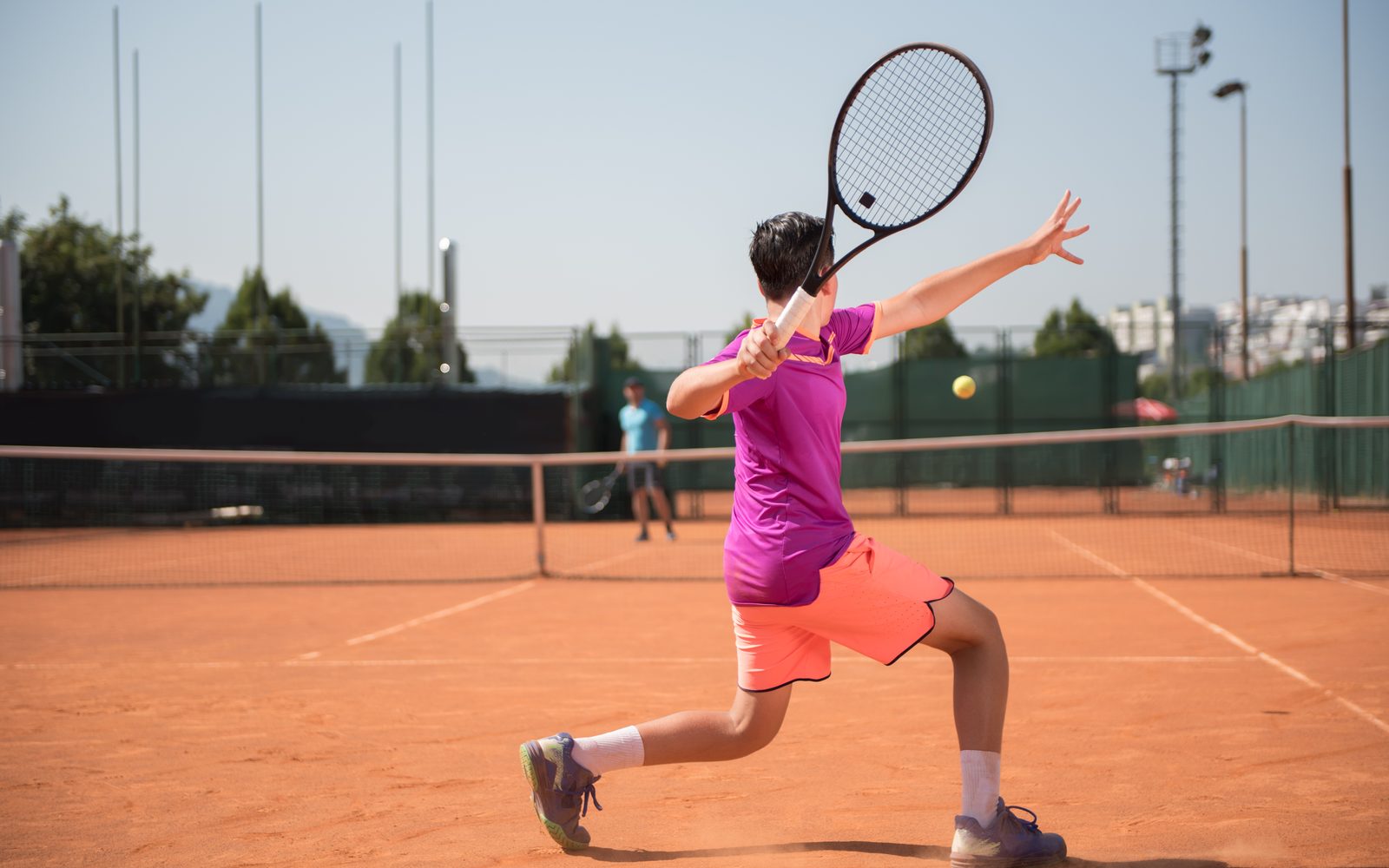
Every stroke in tennis starts as rotation and finishes as reach. The serve asks the shoulder and upper back to move together overhead; the groundstroke asks the trunk to turn and unwind; the wide ball asks the hip and ankle to hold a position most people never otherwise visit. Between points, the sport gives you twenty seconds to be ready again.
Every groundstroke is a coiling and uncoiling of the trunk, finished by the shoulder. Both need to move for the stroke to feel repeatable.
The stretched forehand and the wide backhand take you past comfortable range. How far you can reach without losing your base is a mobility question.
Accelerating, stopping, and recovering to the middle, over and over. The stopping is usually the harder half.
Open-stance strokes and wide balls ask the hip to rotate and the ankle to accept load in positions that daily life never uses.
Twenty seconds between points, ninety at changeovers. Staying loose in those gaps is part of the sport.
The serve is a full overhead motion under speed, repeated. Shoulder and upper-back movement have to share it.
Interactive 3D Tool
Rotate a 3D model through key tennis movement phases, see what each position asks of your body, and reflect on where your own motion feels restricted.
Self-check
Tick anything you notice. There is no score, and none of this is a diagnosis.
Nothing here is stored or sent anywhere. Ticking boxes changes nothing but the note above.
Preparation
General preparation ideas, not a prescribed programme. Move within a comfortable range, and stop if anything is painful.
Questions people ask
No. Dr. Bob does not coach tennis and does not promise performance outcomes. A movement evaluation assesses range of motion and movement quality. What you do with that information, and how it interacts with technique, belongs to you and your coach.
A change in how a motion feels is worth having looked at rather than playing through. Call the office at 561-831-5222 and describe it. Shoulder symptoms have several possible sources, and identifying the right one matters more than guessing.
No. Most people who ask about movement are playing socially and want to keep playing comfortably. Understanding where your motion is limited is as useful at a weekly doubles game as it is in a league.
A coach works on technique, tactics, and practice. A movement evaluation looks at physical range of motion and movement restrictions. They answer different questions, and the useful conversations tend to happen when both are informed.
Dr. Bob's background
Dr. Bob is a Florida-licensed chiropractic physician. A sports movement evaluation assesses range of motion and movement quality. It is not coaching, it does not include a training plan, and it does not promise improvements in score, speed, distance, or athletic performance.
Also in the lab
Tennis movement evaluation
An individual appointment with Dr. Bob to assess range of motion and movement quality. Educational and evaluative — not coaching, and not a promise of athletic improvement.
Prefer to talk? 561-831-5222